Horse Ranch
- 4.5
- Rating
- 50.00K
- Installs
- Free
- Price

 Analysis by App-foxy
Horse Ranch is the kind of arcade game I can open for a short break and understand almost immediately. I am given a ranch to grow, resources to collect, and a horse-riding business to manage, so the basic appeal is easy to grasp without a long explanation. What makes the experience more interesting than that simple outline suggests is the way its setting gives those small tasks a pleasant sense of purpose. I am not merely tapping through disconnected activities; I am gradually turning a modest ranch into something that feels more active and useful.
My first impression was shaped by that clear loop. I ride, gather what the ranch needs, invest the results into expansion, and return to the business side with a better sense of progress. It is a compact formula, but it suits a mobile arcade game well. The strongest part of Horse Ranch is how quickly it turns a few minutes of play into visible ranch progress. I do not need a large uninterrupted session to feel that I have accomplished something.
Developed by Ketchapp, this free game sits in the arcade category while borrowing some ideas from light management and collection games. That combination makes it approachable for players who enjoy simple goals but do not want a complicated simulation. It is rated for Everyone, and I can see why: the presentation is friendly, the central activity is easy to understand, and the game is built around cheerful progress rather than harsh competition.
You May Also Like

 Blood Strike: 2.5 Anniversary
Blood Strike’s Loadouts Turn Every Drop Into a Tactical Gamble
A close look at Blood Strike’s custom loadouts: how fast access to signature weapons reshapes its battle royale rhythm, rewards preparation, and narrows the gap between fights.

 Pandora - Music & Podcasts
Pandora’s Music Is Easy to Start, but Harder to Recover
Pandora’s strength is its low-effort path from a seed to a station. Its weak spot is how much confidence it asks you to place in connection, setup, and quiet recovery.

 8 Ball Pool
 Is Built on Rivalries, Rematches, and Routine
A close look at the rivalries, rematches, shared routines, and unanswered safety questions that turn a quick pool match into a persistent mobile community.

 Samsung Music
’s Quiet Strength Is Playing What You Already Own
Its reach comes less from spectacle than from dependable access to a personal library. That simplicity is both the app’s strongest retention engine and its ceiling.

 AccuWeather: Weather Radar
AccuWeather Review: A Quick, Clear Forecast for Everyday Decisions
For everyday plans, the best forecast is the one you can understand quickly. AccuWeather makes rain timing, radar, and local conditions easy to act on, with a few trade-offs.

 Hill Climb Racing
Why Hill Climb Racing Still Turns Crashes Into One More Run
A tiny car, a bumpy hill and one more upgrade: Hill Climb Racing keeps resurfacing because its simple chaos makes every near-miss feel personal.
More From Our News Desk
View All News


There is also a practical side to deciding whether it belongs on your phone. The game has an average rating of 4.5 from around 1.5 thousand ratings, with more than 50 thousand installs. Those figures suggest that its straightforward ranch concept has found an audience, although they should not be mistaken for proof that every player will enjoy its pace. Horse Ranch is deliberately light. If you want deep horse care, detailed economics, or a demanding riding challenge, this is probably not aiming at that experience.
A small ranch with a clear visual language
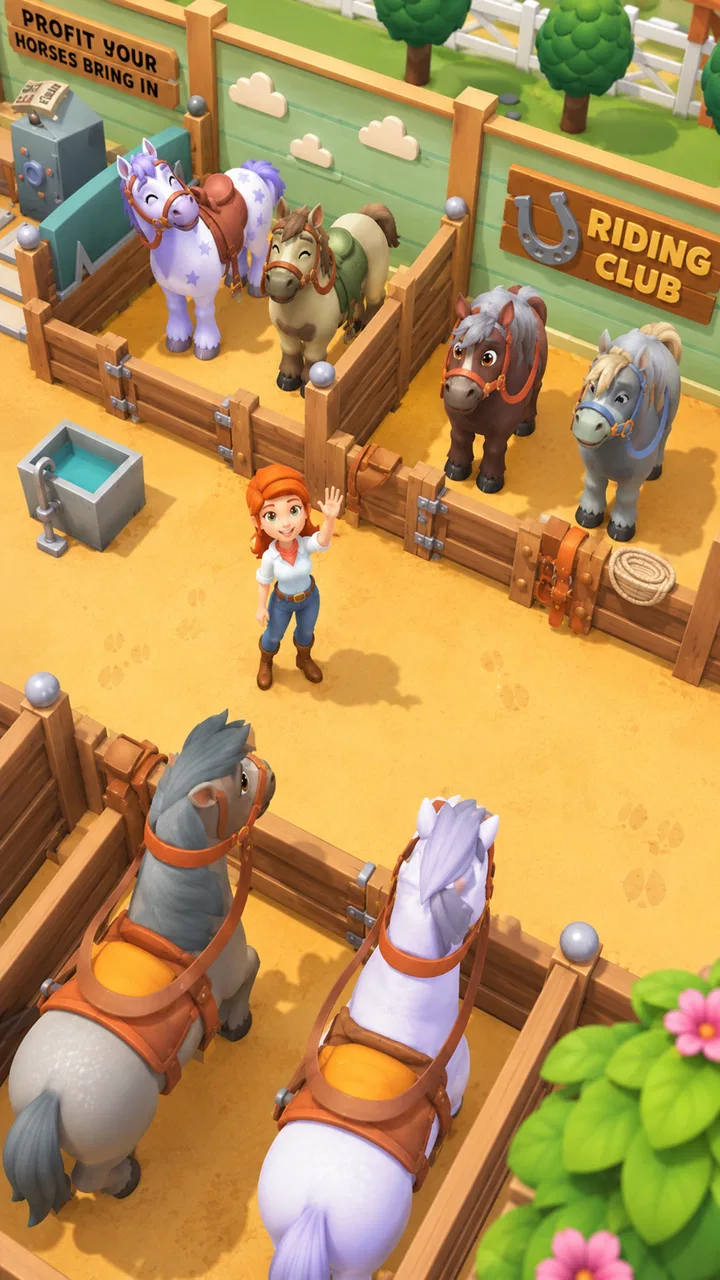
The setting does much of the work in making the mechanics feel connected. Resource gathering makes sense because it supports a place that is being built up, while riding gives the business a recognizable identity. The ranch is not just a menu behind the action; it is the reason the different tasks belong together. That coherence matters in a casual game, because repeated actions can become dull when they have no relationship to one another.
I like the way the horse theme softens the management side. Expanding a business can sound dry when described in isolation, but placing it in a ranch environment gives the same decisions a warmer mood. The result is less about optimizing a spreadsheet and more about maintaining a pleasant routine. I can take a ride, collect useful materials, and then think about which improvement will make the next visit feel more productive.
The art direction also supports the game’s accessibility. It presents the ranch as a welcoming place rather than a realistic working farm that demands attention to every detail. That choice keeps the focus on movement and progress. I never feel that I need specialist knowledge about horses or agriculture before I can enjoy the game. A newcomer can understand the visual message quickly: this is a place to develop, and the horse is central to how the place operates.
One useful way to approach the setting is to treat it as a sequence of small visual goals. Instead of asking whether the ranch is already impressive, I pay attention to what has changed since my last visit. That mindset makes the game more satisfying. The individual actions are modest, but they accumulate into a stronger sense of ownership. For me, this is more rewarding than rushing through every available task without noticing how the ranch is taking shape.
The trade-off is that the friendly presentation may not satisfy players looking for a highly detailed equestrian world. Horse Ranch uses the horse as the emotional and practical center of the game, but it is still an arcade experience first. I would choose it over a more serious simulation when I want a relaxed, readable setting. I would choose a dedicated horse simulator instead when realistic care, training, breeding, or riding technique is the main reason I am playing.
Why the riding theme matters to the loop
Riding is more than decoration because it gives the resource-and-expansion cycle a sense of movement. A purely stationary management game can make progress feel like a list of upgrades. Here, the horse helps break up that feeling. I can shift between moving through the ranch and thinking about what the ranch needs next. That change of activity gives the loop a more natural rhythm than tapping the same type of object repeatedly.
My advice is not to treat every ride as a race toward the next reward. The better experience comes from using riding as a reset between management decisions. I collect what is useful, return to the ranch, and then decide whether expansion is worth pursuing immediately or whether another short round of gathering will make the next improvement more worthwhile. This simple pause prevents the game from becoming a frantic sequence of taps.
That is one of the less obvious strengths of the design: the horse provides a mental transition. It separates preparation from spending. Players who rush directly from one upgrade to another may miss that the game feels calmer when those phases are allowed to breathe. The ranch works best as a gentle loop rather than a checklist that must be emptied as quickly as possible.
Sound, pacing, and the mood of a short session
The overall mood depends heavily on pacing. Horse Ranch is most comfortable when I play it in brief, repeatable visits. I can start with a clear intention, gather resources, make a decision about the ranch, and stop before the routine becomes tiring. That structure makes it suitable for waiting rooms, commutes, or a few minutes between larger tasks. It does not ask me to remember a complicated chain of systems every time I return.
The sound design works best when it reinforces that easygoing rhythm rather than competing with it. In a ranch game, audio should help actions feel connected to the setting: movement should feel separate from collecting, and progress should feel distinct from ordinary activity. Even without turning the volume into the main attraction, the combination of visual warmth and a measured pace helps the game maintain its playable mood.
I would not describe the experience as built around dramatic tension. There is no need for every moment to feel urgent. The appeal comes from settling into a repeatable pattern and watching the ranch become more developed. That makes the game a good companion for players who prefer low-pressure arcade sessions. It is less suitable for someone who needs constant surprises, intense time limits, or a strong competitive edge to stay engaged.
Pacing also affects how I judge the resource system. Gathering is enjoyable when it feels like a short activity with a clear result. It becomes less satisfying when I approach it as an obligation that must be repeated without a meaningful decision afterward. The best sessions therefore have a purpose: I gather because I want a specific improvement or because I am preparing the ranch for a better next visit. Playing without that small goal can make the rhythm feel flatter.
A realistic everyday use case is a short evening break after work. I can open the game, take care of the immediate ranch routine, collect enough resources for one useful step, and close it without feeling that I abandoned a long campaign. The same structure works during a brief daytime pause. The important point is that Horse Ranch rewards returning regularly more than forcing a marathon session.
When the relaxed rhythm becomes a limitation
The calm pacing is not automatically a virtue for everyone. If I am in the mood for a fast arcade challenge, the ranch routine may feel too gentle. Players who enjoy leaderboard pressure or precise reflex tests may find the management layer more appealing than the riding itself. Likewise, people who want a story with major turning points should not expect the ranch atmosphere alone to provide that kind of momentum.
There is also a familiar free-to-play consideration. Horse Ranch costs nothing to start, but it includes in-app purchases ranging from $0.99 to $49.99 per item. I would approach those options carefully and decide in advance whether I am comfortable playing at the free pace. The most satisfying way to use the game, in my view, is to let the ranch develop through ordinary play rather than treating purchases as necessary steps. Anyone who dislikes optional spending in free games should keep that factor in mind before settling into the loop.
The game’s current version is 1.0.15, and it supports devices running Android 7.0 or later. That makes the installation requirements reasonably approachable for many Android users. Still, compatibility is only one part of the decision. I would also consider whether the device handles the game comfortably and whether the player enjoys repeated short sessions, because those points matter more to the day-to-day experience than the version number itself.
How the mechanics support the atmosphere
The central mechanics fit the mood because each one has a clear role. Riding supplies movement and identity, gathering provides the immediate activity, and expansion gives those actions a reason to continue. The business element adds direction without turning the game into a demanding financial simulator. I always know what kind of progress I am working toward, even when the individual step is small.
This is where Horse Ranch compares favorably with many ordinary arcade alternatives. A typical arcade game may focus almost entirely on a score, a timer, or surviving a sequence of obstacles. That structure can be exciting, but it often resets the player’s attention after each attempt. Here, the ranch gives progress a longer memory. What I do in one session contributes to the condition of the setting I return to later.
On the other hand, a deeper management game will usually offer more control over staffing, production, pricing, or long-term planning. Horse Ranch does not need to compete on that level to be enjoyable, but the difference is important. I would recommend it to someone who wants the feeling of running a horse-related business without the burden of managing a detailed economy. I would point a strategy enthusiast toward a more involved management title if they want layered decisions and extensive customization.
One practical tip is to connect every resource run to a planned improvement. Before starting, I ask myself what the next useful expansion is and whether the current trip is enough to move toward it. This keeps the gathering phase from feeling random. It also makes the ranch’s visual changes easier to appreciate because I can link them to a decision I made rather than seeing them as automatic progress.
A second tip is to use the riding portion as a pacing tool rather than trying to maximize it mechanically at all times. If I alternate between active movement and a short planning pause, the game stays fresher. That approach is especially helpful for players who are sensitive to repetitive loops. The horse becomes part of the game’s breathing pattern, not just another route to the next reward.
A third trade-off concerns commitment. The game is easy to sample because it is free and rated for Everyone, but its long-term appeal depends on whether gradual ranch development is enough motivation. I would not install it expecting a large narrative campaign. I would install it when I want a friendly arcade routine with a visible home base and a horse-centered theme.
Who will enjoy the ranch most?
I think Horse Ranch is a strong match for casual players who like collecting resources, improving a personal space, and returning to a project that grows over time. It can also suit families looking for an accessible game with a gentle presentation, although adults should still make their own judgment about in-app purchases on a shared device. The Everyone rating makes the tone approachable, but the best audience is defined more by patience than by age.
It is particularly appealing if you enjoy the satisfaction of small upgrades but do not want to learn a complicated control system. The game’s concept is easy to explain to a friend: ride, gather, improve the ranch, and keep the business moving. That clarity is valuable on mobile, where I may only have a moment to decide whether I want to play.
I would skip it if I need deep realism, a competitive score chase, or constant mechanical variety. I would also hesitate if I know that free-to-play purchase prompts make me uncomfortable, even when the game itself can be started without payment. A more focused arcade title would be better for reflex-based excitement, while a dedicated simulation would be better for detailed horse care and long-term planning.
My atmosphere verdict after settling into the routine
Horse Ranch succeeds because its presentation and mechanics point in the same direction. The ranch setting makes resource gathering and business growth feel connected, the horse gives the player a reason to move through that setting, and the relaxed pacing leaves room for short sessions. I enjoy it most when I approach it as a small daily project rather than a game that needs to deliver a major event every time I open it.
Its limits are clear, but they are also part of its identity. This is not a demanding simulation, and it does not replace a high-energy arcade challenge. The repeated cycle can lose its appeal if I play for too long without a goal, and the presence of in-app purchases means I would keep spending boundaries in mind. Those are real considerations, not reasons to dismiss the game outright.
For me, the deciding quality is coherence. The art direction, ranch setting, horse theme, and measured rhythm support the same relaxed fantasy of building something pleasant over time. Horse Ranch is at its best when I want progress with a calm mood, not pressure with a leaderboard. If that sounds like the kind of mobile break you enjoy, Ketchapp’s game is worth trying for free. If you want realism, competition, or complex management, I would look elsewhere rather than expecting this compact arcade experience to become something it was not designed to be.
After playing it with that expectation, I can recommend it to anyone who likes light ranch development and short, purposeful sessions. The free entry makes sampling easy, the Everyone rating keeps the tone approachable, and the horse-centered setting gives the familiar collection loop a distinct personality. Just decide what kind of player you are before downloading: someone who enjoys gradually shaping a cheerful ranch will likely find a comfortable routine here, while someone seeking depth or intensity may quickly outgrow it.
FAQs for Horse Ranch
01What is Horse Ranch, and what can I do in the game?
Horse Ranch is a horse-focused simulation game where you can care for, train, and enjoy virtual horses in a ranch environment. Players typically manage daily activities such as feeding, grooming, riding, and improving their horses’ abilities. Depending on the available game modes, you may also customize your ranch, complete objectives, participate in challenges, and unlock new items or horse-related features as you progress.
02Is Horse Ranch free to download and play?
Horse Ranch can generally be downloaded without an upfront purchase, but the exact business model may vary depending on the Android or iOS version. Some features, cosmetic items, resources, or progression boosts may be offered through optional in-app purchases. Before downloading, check the store listing for current pricing, advertisements, subscriptions, and whether an internet connection is required for certain parts of the game.
03Does Horse Ranch require an internet connection?
The connection requirements may depend on the specific version and features of Horse Ranch. Basic ranch activities could be available offline in some releases, while advertisements, cloud saving, events, social functions, updates, or purchases may require an internet connection. If offline play is important to you, review the store description and test the game after installation before relying on it without mobile data or Wi-Fi.
04Can I customize my horses and ranch in Horse Ranch?
Customization is one of the main attractions of horse-management games, and Horse Ranch may allow you to personalize horses, equipment, surroundings, or ranch facilities as you advance. Available options can include appearances, names, decorations, and upgrades, although some content may be locked behind progression, timed events, or optional purchases. The amount of customization can also differ between platform versions.
05Is Horse Ranch suitable for children and casual players?
Horse Ranch can appeal to casual players and people who enjoy relaxed animal-care or simulation experiences, but parents should still review the game’s age rating and privacy information before installation. Check whether it includes advertising, in-app purchases, online interactions, or external links. Younger players may also need supervision when spending virtual currency or using features connected to an app-store account.
Pros
- Relaxing horse-care gameplay suitable for casual players.
- Wide variety of horses and customization options.
- Simple controls make it easy to play on mobile devices.
- Ranch-building features add goals beyond caring for horses.
- Bright visuals and friendly presentation appeal to younger players.
Cons
- Progress can become repetitive after completing the main activities.
- Some upgrades and items may require considerable in-game currency.
- The game may feel slow without watching ads or making purchases.
- Limited activities may disappoint players seeking deeper simulation.
- Requires regular attention to keep the ranch and horses progressing.

Horse Ranch
Gallery